
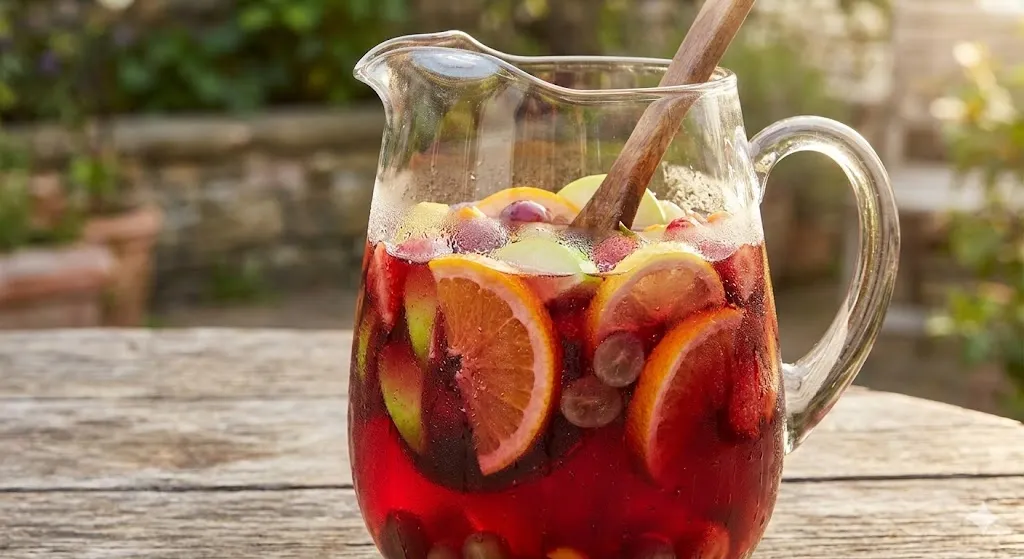
There is nothing quite like a chilled glass of fruity, vibrant sangria to elevate a warm afternoon or a festive dinner party. If you have been searching for that perfect balance of bold wine, premium spirits, and crisp fresh fruit, you have found the ultimate guide.
This easy sangria recipe brings the lively spirit of a traditional Spanish tapas bar right into your own home. It is a refreshing, make-ahead pitcher drink perfect for the casual home entertainer, holiday hosts, or anyone needing a reliable crowd-pleaser.
Whether you are hosting a summer BBQ or craving a cozy weekend beverage, this authentic sangria recipe is incredibly forgiving and simple to prepare. By combining a classic dry red wine, a touch of brandy, and seasonal ingredients, you will easily craft the best homemade sangria to share with friends and family.
Summary :
To make traditional Spanish sangria, muddle sliced green apples, oranges, and lemons with simple syrup in a large pitcher. Add 1/4 cup of brandy, 2 tablespoons of orange liqueur, and one bottle of dry red wine. Chill overnight, then top with club soda before serving over ice.
Table of Contents
What Is Traditional Spanish Sangria?
Authentic Spanish sangria is a traditional Iberian wine punch made by steeping fresh fruit slices in dry red wine, usually fortified with brandy and orange liqueur. The mixture is chilled overnight to allow the complex flavors to meld, resulting in a sweet, fruity, and refreshing batch cocktail served over ice.
Why You’ll Love This Homemade Sangria Recipe
- Ultimate Crowd-Pleaser: This pitcher drink easily serves a large group, freeing you from playing bartender all night.
- Make-Ahead Convenience: Sangria actually tastes better when made the day before, making your party prep entirely stress-free.
- Highly Customizable: You can easily swap the fruits, adjust the sweetness, or change the liquor based on what you have in your pantry.
- Cost-Effective: You do not need top-tier, expensive wine to make an incredible sangria; an affordable, fruity red works perfectly.
- Visually Stunning: A large glass pitcher packed with colorful citrus and mixed berries makes a beautiful centerpiece for any table.
Ingredients
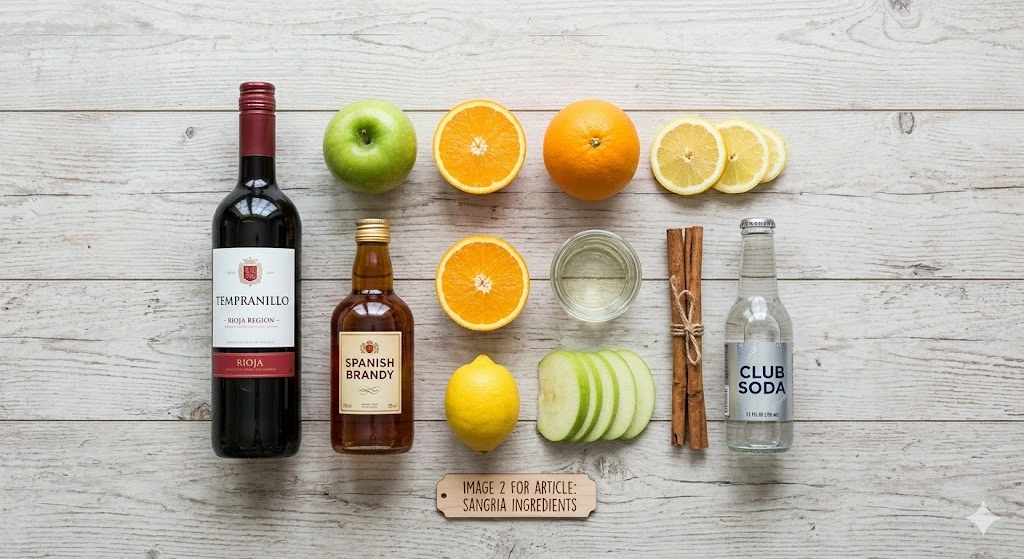
To achieve that authentic flavor profile, you need a balance of acidity, sweetness, and depth. Here is what you need for this traditional Spanish sangria:
- Dry Red Wine: 1 standard bottle (750ml). Look for a Spanish Rioja, Garnacha, or Tempranillo. Pinot Noir also works well. Learn more about selecting the right bottle in this guide to Spanish red wines.
- Brandy: ¼ cup. This fortifies the wine and adds a traditional, warming depth. Cognac is a great substitute.
- Orange Liqueur: 2 tablespoons. Cointreau, Triple Sec, or Grand Marnier enhances the citrus notes.
- Fresh Navel Orange: 1 large, thinly sliced (leaving the peel on for essential oils).
- Green Apple: 1 medium, cored and thinly sliced. The tartness balances the sweet liquids.
- Lemon: ½ medium lemon, thinly sliced.
- Sweetener (Optional): 1-2 tablespoons of simple syrup, maple syrup, or agave nectar, adjusted to your preference.
- Sparkling Water or Club Soda: 1 cup, chilled. Added right before serving to give the drink a refreshing fizz.
How to Make Traditional Sangria (Step-by-Step)
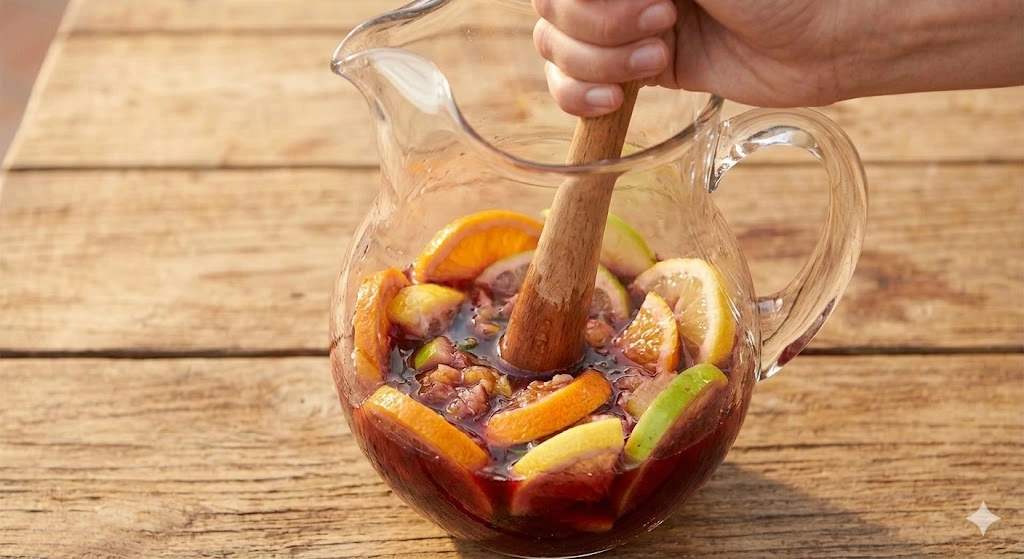
- Prep the Fruit: Wash and slice your orange, green apple, and lemon into thin, even pieces. Leaving the peels on the citrus fruits adds vital aromatic oils to your sangria recipe.
- Muddle the Ingredients: Place the sliced fruit and your chosen sweetener into a large glass pitcher. Use a wooden spoon or muddler to gently press the fruit for about 30 seconds, releasing the natural juices.
- Add the Spirits: Pour the brandy and orange liqueur over the muddled fruit. Stir gently to combine the liquors with the fresh fruit juices and sugar.
- Pour the Wine: Uncork your dry red wine and pour the entire bottle into the pitcher. Give the mixture a good stir to ensure everything is evenly incorporated.
- Chill and Steep: Cover the pitcher tightly and place it in the refrigerator. Let the sangria steep for at least 2 hours, though chilling it overnight yields the most robust, authentic flavor.
- Add Fizz and Serve: Right before serving, pour in the chilled sparkling water or club soda. Serve in large wine glasses or goblets over plenty of ice, making sure to spoon some of the soaked fruit into each glass.
Pro Tips for Perfect Results
- Do Not Splurge on Wine: Because you are mixing it with liquor, fruit, and sugar, save your expensive bottles for drinking straight. A $10 to $15 bottle of dry, fruity Spanish red is the absolute sweet spot.
- Steep for the Right Amount of Time: Patience is key. If you serve it immediately, it will just taste like wine with fruit floating in it. Steeping for 12 to 24 hours allows the fruit to absorb the alcohol and the wine to absorb the fruit sugars.
- Add Bubbles Last: Never add your club soda or ginger ale before refrigerating. The carbonation will go flat overnight. Always stir in your fizzy mixers right before pouring.
- Use Sturdy Fruits: Apples and citrus hold up well to long soaking times. Avoid overly soft fruits like bananas or extremely ripe peaches, as they will turn mushy and cloud the beverage.
Variations and Substitutions
- White Wine Sangria (Sangria Blanca): Swap the red wine for a crisp Sauvignon Blanc or Pinot Grigio. Use white peaches, strawberries, and a splash of elderflower liqueur instead of brandy.
- Low Sugar Sangria Recipe: Omit the simple syrup entirely and let the natural sugars from the fruit do the work. Swap traditional orange liqueur for a splash of fresh squeezed orange juice.
- Non-Alcoholic Sangria (Virgin Sangria): Replace the wine with unsweetened grape juice or cranberry juice, and swap the spirits for a mix of orange juice and extra sparkling apple cider.
- Seasonal Fall/Winter Sangria: Add a couple of cinnamon sticks and star anise to the pitcher while it steeps. Swap the lemons for fresh cranberries and pears.
How to Store and Make Ahead
- Make-Ahead Timing: You can prepare the base of this sangria recipe (wine, liquor, fruit, sweetener) up to 48 hours in advance. Keep it tightly covered in the refrigerator until party time.
- Storing Leftovers: Leftover sangria will keep in the fridge for up to 3 days. However, the fruit will eventually become overly soft and bitter from the citrus rinds, so it is best to strain the fruit out if keeping it past day two.
- Freezing: You cannot freeze mixed sangria effectively. However, you can freeze leftover sangria in ice cube trays and use those flavored cubes to chill your next fresh batch without watering it down.
What to Serve with Sangria
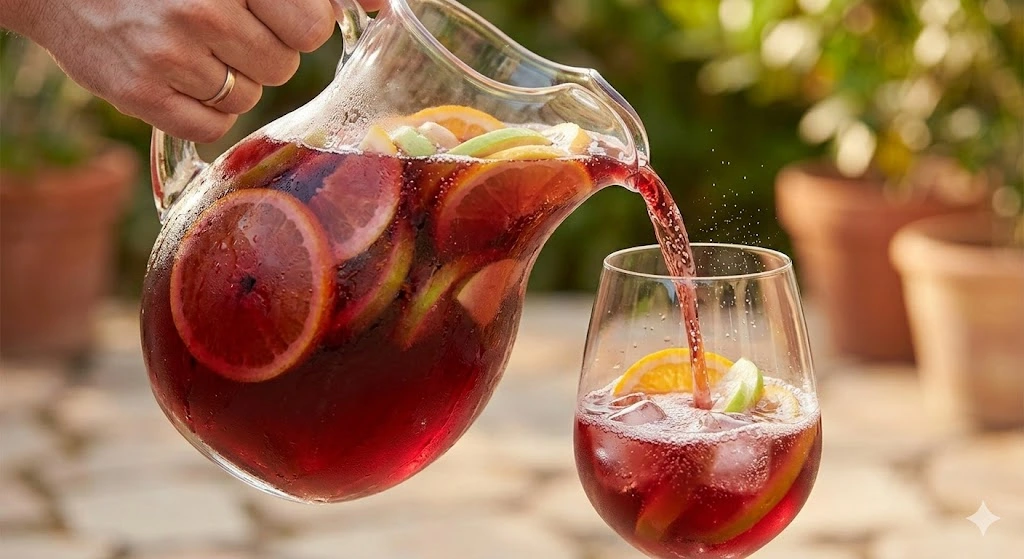
This traditional Spanish sangria pairs beautifully with savory, salty, and spicy foods. Tapas-style dining is the authentic choice, but it also works wonderfully with robust dinners.
- Pair it with our favorite Authentic guacamole recipe for a vibrant summer appetizer.
- Serve it alongside a hearty main course like this Rich and Creamy Chicken Alfredo.
- For a true Spanish flair, pair your pitcher drinks with a platter of aged Manchego cheese, Marcona almonds, and cured meats.
FAQs
What is the best red wine to use for sangria?
The best red wine for sangria is a dry, fruity, medium-bodied Spanish wine like Rioja, Garnacha, or Tempranillo. These wines have low tannins and bright fruit notes that blend perfectly with brandy, citrus, and added sweeteners without becoming overly bitter.
Do you have to put brandy in sangria?
No, you do not have to use brandy. While brandy is traditional for authentic Spanish sangria, you can easily substitute it with cognac, dark rum, or vodka. You can also omit the extra liquor entirely for a lighter, lower-ABV beverage.
Can I make sangria the night before?
Yes, making sangria the night before is highly recommended! Chilling the mixture overnight allows the fresh fruit to marinate and the complex flavors of the wine, spirits, and juices to meld together perfectly. Just wait to add any carbonated mixers until serving.
How long should sangria sit before serving?
For the best flavor, sangria should sit in the refrigerator for at least two to four hours before serving. If you have the time, letting it steep for 12 to 24 hours will yield a much smoother, richer, and traditional taste profile.
What fruits go best in sangria?
The best fruits for sangria are sturdy varieties that will not break down easily in alcohol. Green apples, navel oranges, lemons, and limes are traditional. For variations, firm peaches, plums, and mixed berries (like strawberries and blackberries) also work wonderfully.
Is sangria very high in sugar?
Traditional restaurant sangria can be high in sugar due to heavy syrups and sugary sodas. However, making homemade sangria allows you to control the sweetness. You can make a low sugar sangria recipe by omitting simple syrup and using plain sparkling water. For deeper nutritional insights on alcohol and sugar, you can check the USDA FoodData Central.
Nutritional Information
Note: Nutritional values are approximate and vary based on the specific brands of wine and liquor used, as well as the exact amount of fruit consumed.
- Calories: ~180 kcal per serving
- Carbohydrates: 14g
- Sugars: 9g
- Protein: 0.5g
- Sodium: 10mg
Final Thoughts
Mastering a traditional sangria recipe is a game-changer for anyone who loves to entertain. With its stunning visual appeal, make-ahead convenience, and refreshing flavor profile, it is guaranteed to become a staple in your recipe rotation.
Whether you stick to the classic Spanish preparation or experiment with seasonal fruits and different wines, the result is always a celebration in a glass. Grab a pitcher, chop up some fresh fruit, and enjoy this fantastic batch cocktail at your next gathering!