
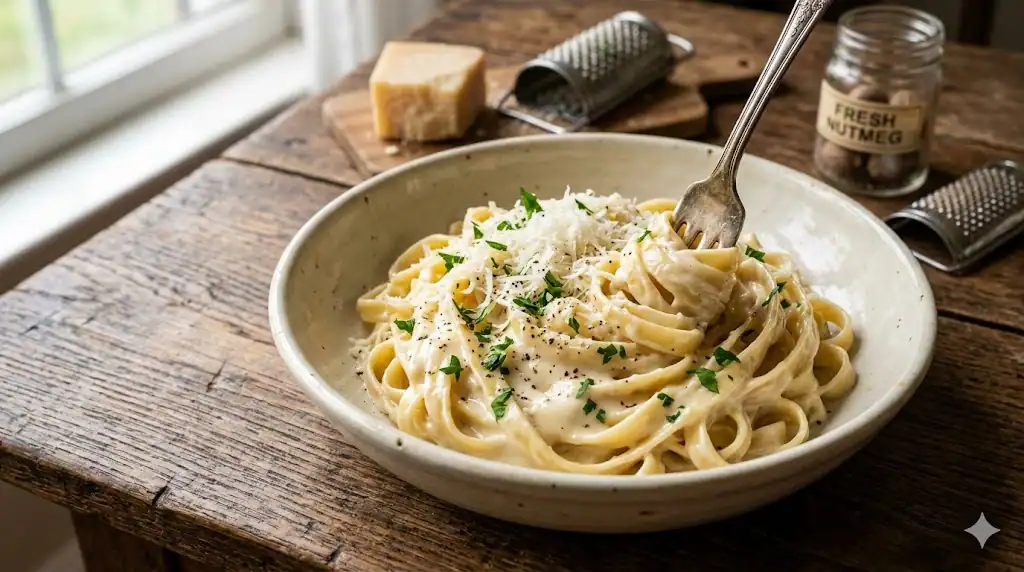
There is something deeply comforting about a bowl of pasta swirled in a creamy, golden sauce. We have all been there—standing in the pasta aisle, reaching for a convenient glass jar, only to be disappointed by a bland, metallic aftertaste. What if I told you that the secret to a restaurant-quality meal isn’t found on a shelf, but in your own fridge?
This homemade Alfredo sauce recipe is the ultimate game-changer for busy weeknights and elegant date nights alike. By using just a few high-quality staples like heavy whipping cream, unsalted butter, and freshly grated Parmigiano-Reggiano, you can create a sauce that is light-years ahead of anything pre-made. It is perfect for the “Busy Weeknight” parent who needs a win in under 15 minutes, or the aspiring home chef looking to master the art of emulsification. This easy Alfredo sauce delivers a velvety texture and a rich, nutty flavor profile that will make your kitchen feel like a high-end Italian trattoria.
Summary : This professional Alfredo sauce recipe uses a simple combination of heavy cream, unsalted butter, and freshly grated Parmigiano-Reggiano. By simmering the cream and emulsifying the cheese over low heat, you achieve a silky, restaurant-quality texture in under 10 minutes. Perfect for fettuccine, chicken, or vegetables.
Table of Contents
What Is an Alfredo Sauce Recipe?
An Alfredo sauce recipe is a classic Italian-American white sauce traditionally made by combining butter, heavy cream, and Parmesan cheese. Unlike a Béchamel, it does not typically require a flour-based roux, relying instead on the reduction of cream and the melting of cheese to achieve its iconic velvety texture. It is the primary topping for Fettuccine Alfredo.
Why You’ll Love This Alfredo Sauce Recipe
Making Alfredo sauce from scratch isn’t just about the flavor; it’s about the experience and the control you have over your ingredients.
- Lightning Fast: Goes from the fridge to the table in roughly 10 minutes—faster than it takes to boil your pasta.
- Better-Than-Jarred: No preservatives, no weird thickeners like cellulose, and no artificial flavors.
- Total Customization: Easily adjust the garlic levels or swap ingredients for a keto Alfredo sauce or a lighter version.
- Kid-Approved: It is the ultimate “picky eater” solution; even the most stubborn eaters can’t resist a creamy white sauce.
- Pantry Staples: You likely already have the butter, cream, and cheese in your kitchen right now.
Ingredients
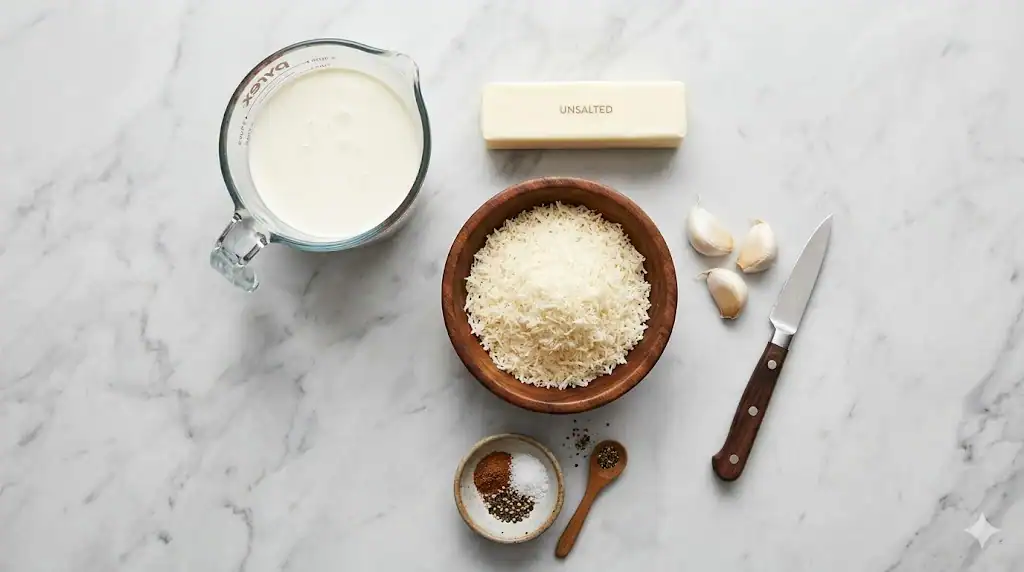
To ensure the best results, use the highest quality ingredients you can find. Freshness is the key to preventing a grainy Alfredo sauce.
- 1/2 cup Unsalted Butter: High-quality European-style butter provides a richer fat content.
- 2 cups Heavy Whipping Cream: Essential for that thick, luxurious mouthfeel.
- 1 ½ cups Freshly Grated Parmigiano-Reggiano: Do not use the green shaker bottle; fresh cheese is required for proper melting.
- 2 cloves Freshly Minced Garlic: Adds a sharp, savory depth to the cream.
- ¼ tsp Ground Nutmeg: The “secret ingredient” that brings out the nuttiness of the Parmesan.
- Salt and Cracked Black Pepper: To taste.
- Optional: 1 tbsp Fresh Parsley: For a pop of color and freshness at the end.
How to Make Alfredo Sauce Recipe (Step-by-Step)
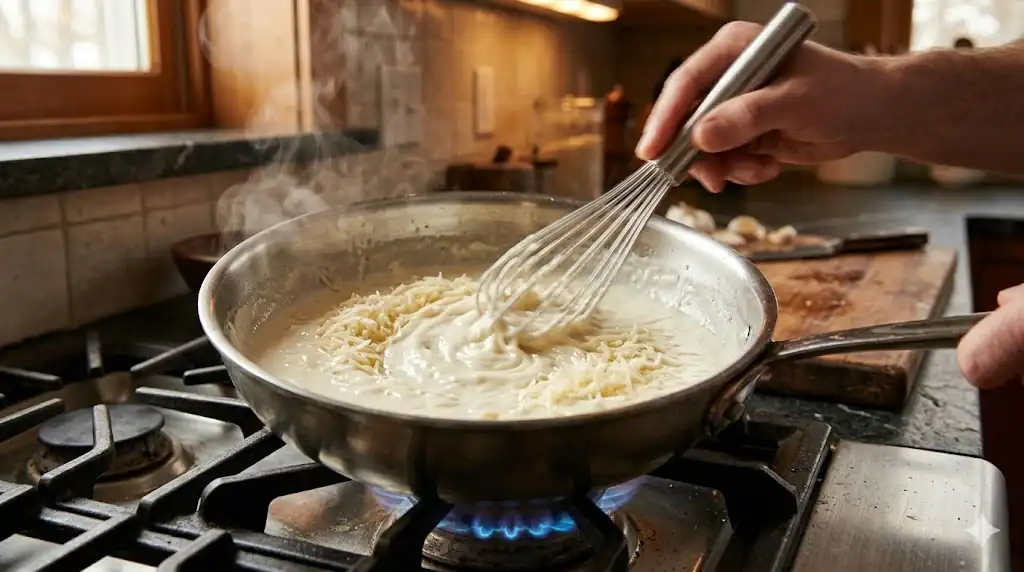
Follow these steps precisely to ensure your sauce stays smooth and doesn’t separate.
- Melt the Butter: In a medium saucepan or skillet, melt the butter over medium-low heat. Be careful not to let it brown; we want a clean, creamy base.
- Sauté the Garlic: Add the minced garlic to the melted butter. Sauté for about 30–60 seconds until fragrant. Pro Tip: If the garlic turns brown, it will taste bitter. Keep the heat low.
- Simmer the Cream: Pour in the heavy whipping cream. Increase the heat slightly to medium and bring to a gentle simmer. Let it bubble softly for 3–5 minutes, whisking occasionally, until it begins to reduce and thicken slightly.
- Incorporate the Cheese: Lower the heat to the lowest setting. Add the freshly grated Parmesan cheese in small handfuls, whisking constantly.
- Emulsify: Continue whisking until the cheese is completely melted and the sauce is smooth. This is the emulsification process where the fat and liquid bind together.
- Season and Serve: Stir in the nutmeg, salt, and pepper. Remove from heat immediately. The sauce will continue to thicken as it cools. Toss with your favorite al dente pasta and a splash of starchy pasta water if needed.
Pro Tips for Perfect Results
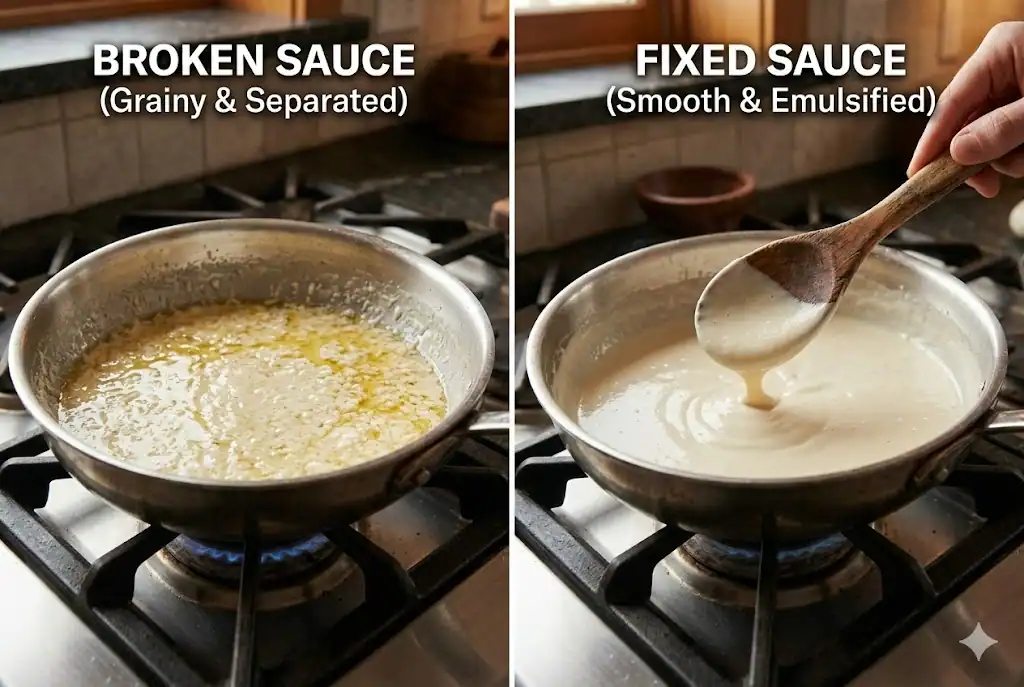
The difference between a “good” sauce and a “perfect” one lies in the technique.
- Grate Your Own Cheese: Pre-shredded cheeses are coated in potato starch or cellulose to prevent clumping in the bag. This same coating will make your sauce grainy. Grate a block of cheese for a silky texture.
- Low and Slow: High heat is the enemy of dairy. If you boil the sauce too vigorously, the proteins in the cheese will seize, and the sauce will “break” (separate into oil and solids).
- The Spoon Test: To check if your sauce is ready, dip a metal spoon into it. If the sauce coats the back of the spoon without running off immediately (the nappé stage), it is perfect.
- Warm Your Pasta: Always toss your pasta into the sauce while the noodles are still hot. This helps the sauce “grip” the noodles.
Variations and Substitutions
Whether you have dietary restrictions or just want to experiment, this recipe is incredibly flexible.
- Keto Alfredo Sauce: This recipe is naturally low-carb! Just ensure you serve it over zoodles (zucchini noodles) or spaghetti squash instead of wheat pasta.
- Healthy/Light Alfredo: Swap the heavy cream for half-and-half or whole milk mixed with a teaspoon of cornstarch. It won’t be as thick, but it will be lower in calories.
- Vegan Alfredo Sauce: Use a base of soaked cashews blended with water, nutritional yeast, and garlic powder for a dairy-free alternative.
- Cajun Alfredo: Add 1 tablespoon of blackened seasoning or Creole spice for a spicy, southern twist.
- Cream Cheese Alfredo: Some people add 2 oz of cream cheese to the butter/cream mixture. This acts as a stabilizer and makes the sauce even thicker and tangier.
How to Store and Reheat
Alfredo sauce is best served fresh, but you can save leftovers if you are careful with the reheating process.
- Storage: Place the sauce in an airtight container and refrigerate for up to 3–4 days.
- Reheating: This is the tricky part. Do not microwave it on high heat, or it will turn into an oily mess. Reheat in a small saucepan over very low heat, adding a splash of milk or water to loosen it up. Whisk constantly until creamy again.
- Freezing: I do not recommend freezing homemade Alfredo sauce. The emulsion of cream and butter usually breaks during the thawing process, resulting in a grainy texture.
What to Serve with This Alfredo Sauce Recipe
While Fettuccine Alfredo is the gold standard, this sauce is a versatile “mother sauce” for many dishes.
- Proteins: Serve over [Grilled Lemon Herb Chicken] or [Garlic Butter Shrimp].
- Vegetables: Use it as a dipping sauce for [Roasted Broccoli] or [Air Fryer Asparagus].
- Pizza: Use this as a white base for a [Gourmet Spinach and Artichoke Pizza].
- Bread: Always serve with a side of [Cheesy Garlic Bread] to soak up every last drop of sauce.
FAQs
How do I thicken Alfredo sauce without flour?
To thicken the sauce without a roux, simply let the heavy cream simmer and reduce by about one-third before adding your cheese. The reduction process concentrates the fats and proteins. Additionally, adding more finely grated Parmesan cheese will naturally thicken the mixture through emulsification.
Why did my Alfredo sauce turn out grainy?
A grainy texture is usually caused by two things: using pre-shredded cheese containing anti-clumping agents (cellulose) or adding the cheese to a sauce that is too hot. Always grate your cheese fresh and stir it in over low heat to ensure a smooth melt.
Can I use milk instead of heavy cream?
Yes, you can use whole milk, but the sauce will be much thinner. If using milk, you may need to create a “slurry” with a teaspoon of cornstarch and cold water to help it reach the desired thickness. The flavor will also be less rich than the traditional version.
What is the best cheese for authentic Alfredo?
The gold standard is Parmigiano-Reggiano. This is a DOP (Protected Designation of Origin) cheese from Italy. It has a complex, nutty, and salty flavor that imitation “Parmesan” cannot match. For the best results, look for the name embossed on the rind of the cheese.
How do I prevent my sauce from separating?
Separation happens when the fat in the butter and cream detaches from the liquid. To prevent this, keep your heat low and avoid boiling the sauce once the cheese has been added. If it starts to separate, a vigorous whisking and a teaspoon of hot pasta water can sometimes bring it back together.
Is Alfredo sauce gluten-free?
Yes, this specific recipe is naturally gluten-free because it does not use a flour roux for thickening. However, always check your spices and cheese labels for hidden additives, and ensure you are serving it with gluten-free pasta or vegetables.
Nutritional Information (Per Serving)
Serving size: 1/4 cup
| Nutrient | Value |
|---|---|
| Calories | 320 kcal |
| Total Fat | 31g |
| Saturated Fat | 19g |
| Cholesterol | 95mg |
| Sodium | 420mg |
| Total Carbohydrates | 3g |
| Protein | 8g |
Final Thoughts
Mastering a homemade Alfredo sauce recipe is one of the most rewarding skills a home cook can have. It turns a simple box of pasta into a luxurious, comforting feast that rivals any Italian restaurant. Remember: use fresh cheese, keep the heat low, and don’t skip the nutmeg!
Once you try this, you’ll never go back to the jar again. If you enjoyed this recipe, please share it on Pinterest or leave a comment below telling me your favorite way to serve it! Happy cooking!