
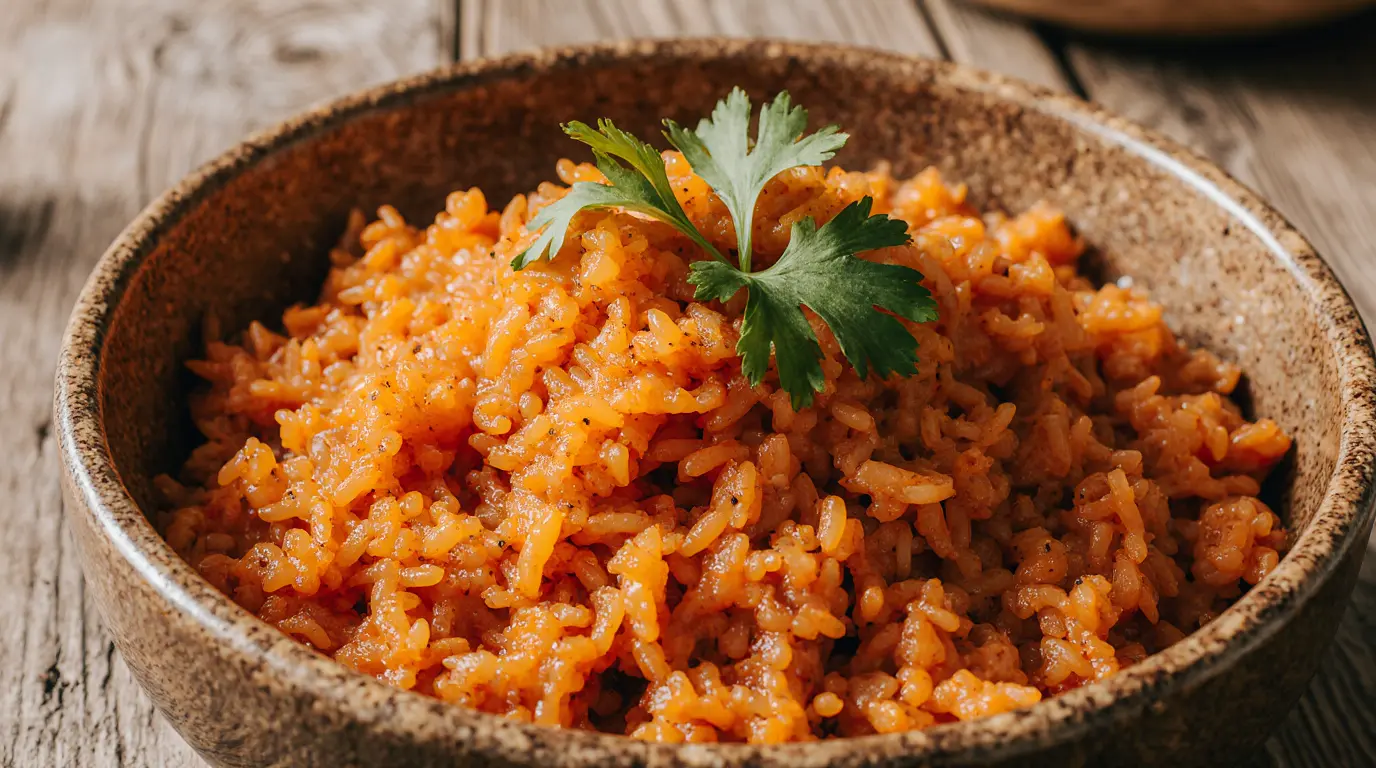
Mexican rice—also known as arroz rojo—is a staple side dish served with tacos, enchiladas, burritos, and many traditional Mexican meals. When prepared correctly, this authentic Mexican rice recipe delivers fluffy grains, rich tomato flavor, and a vibrant red color—not mushy, bland, or sticky.
This guide explains the restaurant-style technique used in Mexican kitchens, shows why each step matters, and helps you avoid the most common mistakes. Master it once, and you’ll make perfect arroz rojo every time.
Table of Contents
What Is Mexican Rice (Arroz Rojo)
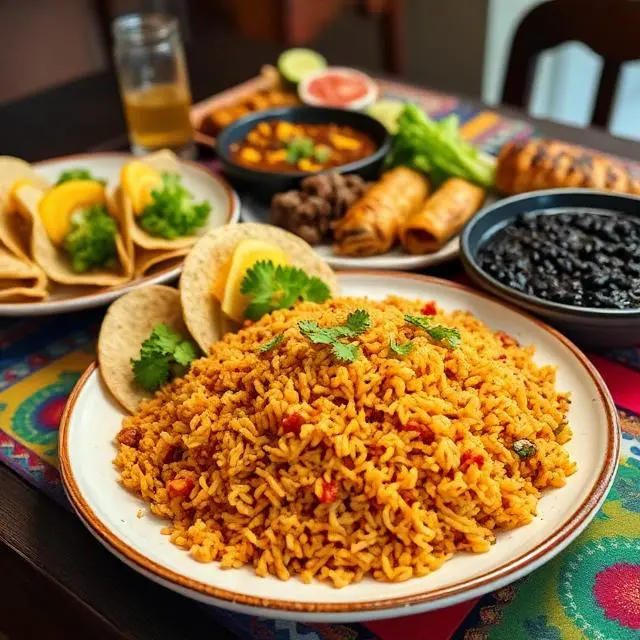
Mexican rice, or arroz rojo, is a savory rice dish made by toasting long-grain white rice in oil, then simmering it with a tomato base, broth, garlic, onion, and seasonings until fluffy and red.
Why It’s Called Arroz Rojo
- Arroz means rice
- Rojo means red
- The color comes from tomatoes or tomato bouillon—not chili powder
Mexican Rice vs Spanish Rice
These dishes are often confused, but they’re not the same:
Mexican rice (arroz rojo)
- Tomato-based
- Rice is toasted before cooking
- Light, fluffy grains
Spanish rice
- Often uses paprika or saffron
- Softer texture
- Term commonly used outside Mexico
Authentic Mexican cuisine refers to this dish as arroz rojo.
What Makes Authentic Mexican Rice Perfect?
Perfect Mexican rice depends more on technique than ingredients:
- Toasting the rice to build nutty flavor
- Using the correct rice-to-liquid ratio
- Choosing the right tomato base
- Seasoning gently but intentionally
- Letting the rice steam instead of stirring
Skipping even one step affects both flavor and texture.
Best Ingredients for Mexican Rice Recipe
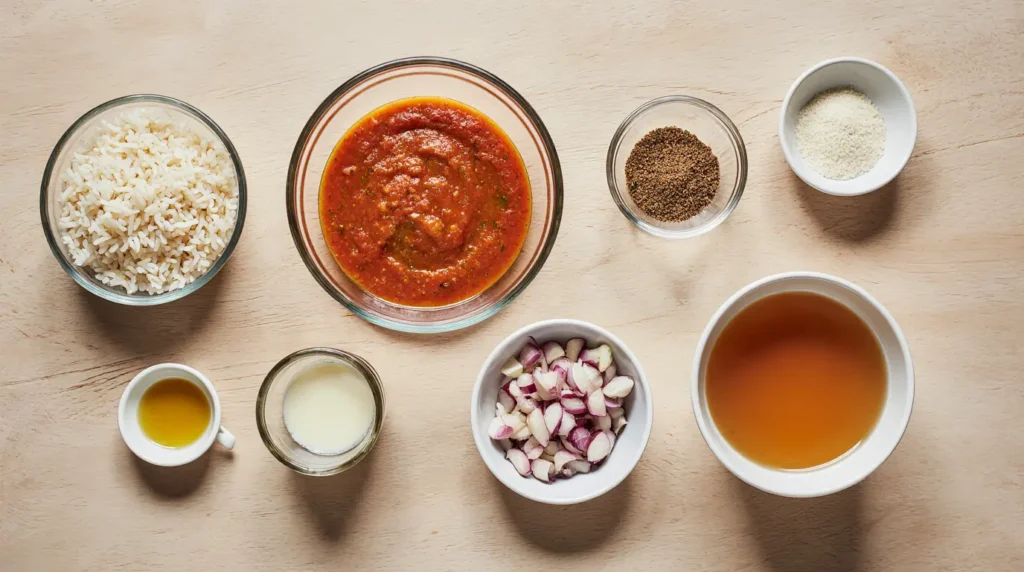
Long-Grain White Rice (Why It Matters)
- Produces fluffy, separate grains
- Absorbs liquid evenly
- Traditional choice for arroz rojo
Why short-grain rice fails
- Releases excess starch
- Turns sticky or mushy
- Lacks proper structure
Tomato Base Options
The tomato element gives Mexican rice its color and depth.
- Tomato sauce – consistent, easy, balanced
- Fresh tomatoes (blended) – brighter flavor, more traditional
- Tomato bouillon – common in restaurants, adds umami (use lightly)
Broth vs Water (Flavor Comparison)
- Chicken broth – most traditional, richest flavor
- Vegetable broth – ideal for vegan Mexican rice
- Water – works only if seasoning is adjusted carefully
Aromatics and Seasonings
Simple ingredients used with restraint:
- Garlic (fresh, minced)
- Onion (white or yellow)
- Cumin (optional but authentic)
- Salt (adjust based on broth or bouillon)
Optional Traditional Add-Ins
Often used in home-style Mexican rice:
- Peas
- Diced carrots
- Fresh cilantro (added after cooking)
Mexican Rice Recipe: Step-by-Step Instructions
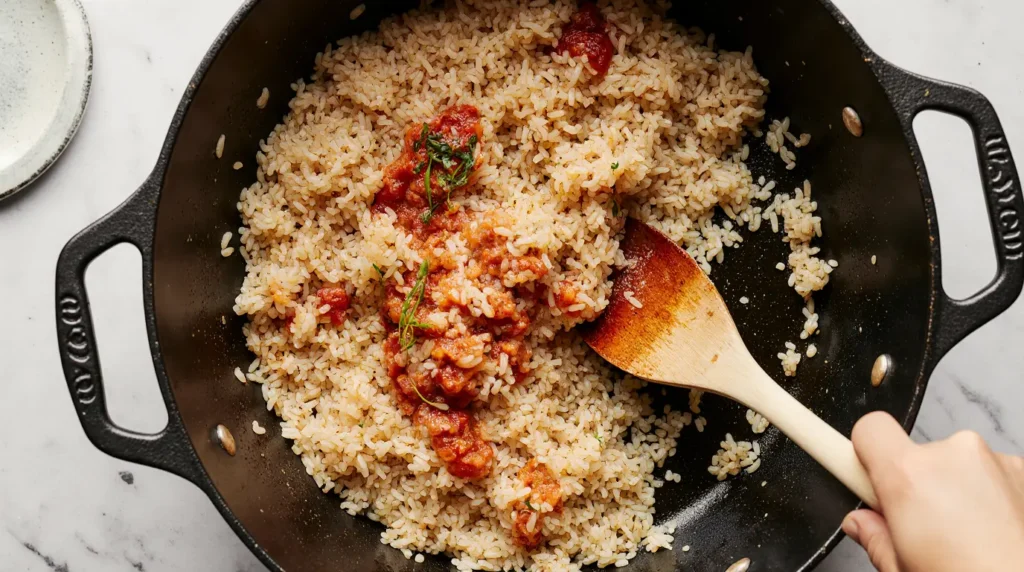
Ingredients (Serves 4)
- 1 cup long-grain white rice
- 2 tablespoons neutral oil
- ¼ cup tomato sauce (or blended fresh tomato)
- 2 cups chicken or vegetable broth
- 2 cloves garlic, minced
- ¼ cup finely diced onion
- ½ teaspoon salt
- ¼ teaspoon cumin (optional)
Step 1 – Rinse and Dry the Rice
- Rinse until water runs clear
- Drain thoroughly
Why this matters
- Removes surface starch
- Prevents gummy rice
Step 2 – Toast the Rice Until Golden
- Heat oil over medium heat
- Add rice and stir constantly
- Toast until lightly golden
Visual cues
- Slight color change
- Nutty aroma, no dark spots
Step 3 – Add Aromatics and Tomato Base
- Add onion and garlic
- Cook 30–60 seconds
- Stir in tomato sauce
Tip: Garlic should soften, not brown.
Step 4 – Add Broth and Seasonings
- Carefully add broth
- Season with salt and cumin
- Stir once only
Golden rule:
- 1 cup rice : 2 cups liquid
Step 5 – Simmer, Steam, and Rest
- Bring to a gentle boil
- Cover tightly
- Reduce heat and cook 15 minutes
Do not
- Stir
- Lift the lid
Rest off heat for 5 minutes.
Step 6 – Fluff and Serve
- Use a fork
- Gently separate grains
Perfect texture
- Fluffy
- Dry but tender
- Evenly red
Ideal Rice-to-Liquid Ratio for Arroz Rojo
| Rice | Liquid | Result |
|---|---|---|
| 1 cup | 2 cups | Perfectly fluffy |
| More than 2 cups | Mushy | |
| Less than 2 cups | Undercooked |
Too much liquid breaks the grain and releases excess starch.
Common Mexican Rice Mistakes (And How to Fix Them)
- Mushy rice → Too much liquid or stirring
- Bland rice → Not toasted enough or weak broth
- Burnt bottom → Heat too high
- Pale color → Not enough tomato or bouillon
How to Make Mexican Rice Like Restaurants
Restaurants focus on consistency:
- Use tomato bouillon for color and depth
- Toast rice evenly in enough oil
- Maintain low, steady heat
- Always allow resting time
Pro tip: Steaming finishes the rice—rushing ruins it.
Easy Mexican Rice Variations
- Mexican rice with tomato sauce – easiest and most reliable
- Mexican rice with fresh tomatoes – brighter, traditional flavor
- One-pot Mexican rice – add vegetables with broth
- Mexican rice without tomato bouillon – increase tomato sauce slightly
- Vegan Mexican rice – use vegetable broth
What to Serve with Mexican Rice
- Tacos
- Enchiladas
- Burritos
- Grilled chicken or carne asada
- Black or pinto beans
How to Store and Reheat Mexican Rice
Refrigerator
- Airtight container
- 4–5 days
Freezer
- Cool completely
- Freeze up to 2 months
Reheating
- Add 1–2 tablespoons water
- Cover and heat gently
- Fluff before serving
✅ Final Thoughts: Mastering Mexican Rice
Great Mexican rice isn’t about complexity—it’s about control. Toast the rice, respect the ratio, avoid stirring, and let steam finish the job. Once you understand the technique, arroz rojo becomes one of the easiest and most reliable dishes in your kitchen.
Try the variations, adjust the tomato base, and make this Mexican rice recipe your own—while keeping the fundamentals intact.
FAQs About Mexican Rice Recipe
1. What is the secret to making authentic Mexican rice?
The secret to an authentic Mexican rice recipe is toasting long-grain white rice in oil before adding liquid. This step builds flavor and prevents mushy rice. Using the correct 2:1 liquid ratio and a tomato base ensures fluffy, perfectly cooked arroz rojo.
2. Why does my Mexican rice turn out mushy?
Mexican rice becomes mushy when too much liquid is used or the rice is stirred during cooking. Always follow a 2:1 liquid-to-rice ratio, toast the rice first, and keep the lid closed while simmering to allow proper steaming.
3. Can I make Mexican rice without tomato bouillon?
Yes, you can make a Mexican rice recipe without tomato bouillon by using tomato sauce or blended fresh tomatoes instead. Increase seasoning slightly and use flavorful broth to compensate. The result is still authentic, red, and full of traditional Mexican rice flavor.
4. Is Mexican rice the same as Spanish rice?
No, Mexican rice and Spanish rice are not the same. Mexican rice, or arroz rojo, uses tomatoes and is toasted before cooking, giving it a fluffy texture. Spanish rice often uses paprika or saffron and is a broader term mostly used outside Mexico.
5. Can I cook Mexican rice in a rice cooker?
Yes, Mexican rice can be made in a rice cooker, but for best results, toast the rice, onion, garlic, and tomato base in a pan first. Then transfer everything to the rice cooker with broth and cook using the white rice setting.
6. How do I make Mexican rice fluffy and not sticky?
To keep a Mexican rice recipe fluffy, rinse and dry the rice, toast it evenly in oil, use long-grain rice, and avoid stirring while cooking. Let the rice rest covered after cooking, then fluff gently with a fork before serving.
Oi, galera! Achei o barganha8 show de bola pra quem tá procurando umas promoções maneiras. Naveguei por lá rapidinho e já achei uns descontos bem legais. Vale a pena conferir! E olha, clica aqui: barganha8
wlqwyvzxphusjsgvhexmrgnlzurwsw
Get ready for some serious fun with soflo wheelie life! This game is packed with awesome features like customizable bikes and thrilling challenges. If you love action and arcade-style gameplay, you’ll definitely want to jump into this one for hours of entertainment. It’s a blast!
How are you?
Wishing you a happy day, every day!
A really good blog and me back again.
每天都在战争,希望2026和平.
If you’re looking for a relaxing yet engaging experience, classic solitaire deluxe is a fantastic choice. Its intuitive gameplay and classic design make it perfect for unwinding. Dive into endless hours of fun with this timeless card game!